July 12, 2026 · Autoriax
Why Third-Party Authority Signals Matter More Than Ever for AI-Generated Content
Discover why third-party authority signals matter more than ever for AI-generated content in 2026. Learn topic-specific strategies for visibility.

In the rapidly evolving digital landscape of 2026, the foundational principles of search engine optimization are undergoing a radical transformation. The traditional era of ranking in Google and earning traffic is no longer the sole path to visibility. Today, answer engines like ChatGPT, Perplexity, and Google’s AI Overviews have shifted the focus from ranked lists of links to synthesized answers. In this new environment, the most critical currency is not content volume—it is third-party authority signals. As AI-generated content floods the web, these external validation markers have become the only way for AI models to distinguish credible information from synthetic noise. For brands operating in the AI content generation sector, understanding why third-party mentions now outweigh on-site optimization is essential for survival.
Quick Facts: Why Third-Party Authority Signals Matter More Than Ever for AI-Generated Content
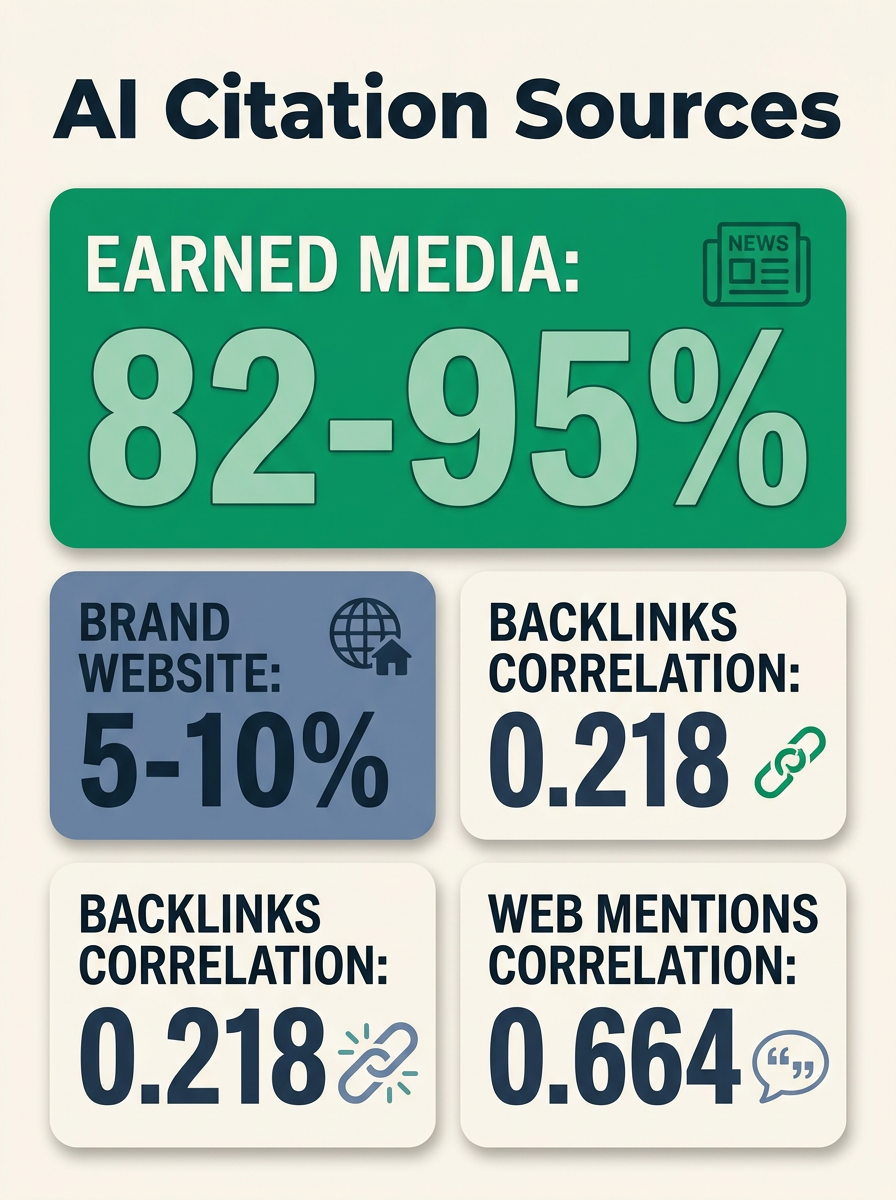
- 82–95% of all AI citations come from third-party earned sources, not brand websites.
- Brand web mentions correlate 3x more strongly with AI visibility than traditional backlinks.
- Gartner predicts 60% of brands will adopt third-party content verification by 2027.
The Trust Gap: Why AI Prefers Earned Over Owned Media
AI models function as risk-averse consensus engines rather than creativity machines. When a user asks a question, the AI uses Retrieval-Augmented Generation (RAG) to ground its response in external data. If a claim exists only on a company’s website, the AI may treat it as biased marketing. However, if that same information is mirrored across independent news outlets and review platforms, the AI recognizes a consensus and cites the brand with confidence. This structural shift means that technical SEO on your domain is necessary but insufficient for modern visibility.
The 82–95% Rule in Action
Perhaps the most startling data point for 2026 is that 82–95% of all AI citations come from third-party earned sources, while a brand’s own website contributes only 5–10% of the information AI references. Six independent research studies have confirmed this pattern, including data showing that earned media accounts for 82% of all AI citations. Furthermore, brand web mentions correlate 3x more strongly with AI visibility than traditional backlinks. Distributing content through third-party news outlets produces a median 239% lift in AI citation visibility compared to hosting it only on an owned blog.
Why AI Distrusts Self-Published Content
Because a website is a self-published source, it cannot provide independent verification of a brand’s reputation. AI systems reduce this uncertainty by cross-referencing information across multiple sources to confirm credibility and consistency. In trust-sensitive industries, AI systems are increasingly programmed to prioritize content only when it is accompanied by third-party fact-checking. This trust gap means that content on a single domain fails to persuade AI without external corroboration.
Key Takeaway: AI models prioritize earned media and independent verification over self-published content, making third-party mentions the primary driver of visibility.
Frequently Asked: Why does AI ignore my website content?
AI ignores self-published content because it lacks independent verification. Models cross-reference claims across multiple external sources to confirm credibility before citing them in answers.
Topic-Dependent Authority: Why One-Size-Fits-All Fails
The third-party sources that build AI trust vary dramatically by topic, meaning a generic backlink strategy is ineffective. For example, health content relies on peer-reviewed journals, while SaaS relies on G2 reviews and tech publications. Ignoring topic specificity, such as using Reddit for medical advice, can actually harm AI trust. Brands must identify the specific set of domains that AI cites for their target topic and target those entities specifically.
Topic-Specific Trust Hierarchies
For AI-generated content, the most effective signals are those appearing in the AI’s training data for the specific topic cluster. In healthcare, AI prioritizes peer-reviewed journals, clinical trials, and government health sites. In finance, citations from SEC filings, Reuters, and Bloomberg carry the most weight. For e-commerce, verified purchase reviews and industry awards are key. Generic authority is no longer effective because the sources an AI trusts for invoicing software are different from the sources it trusts for starting a business.
The Risk of Wrong Platform Authority
Building authority on the wrong third-party platforms can harm AI trust. For instance, accumulating Reddit upvotes for health content may lower credibility because AI models penalize sources that are topically inconsistent with the query. Models use entity recognition and semantic clustering to detect mismatches. A brand known for gaming content cited in finance queries loses trust. Therefore, understanding the topic-based matrix is critical for strategic planning.
Key Takeaway: Authority signals are topic-specific; using the wrong platforms for your niche can dilute credibility and reduce AI visibility.
| Industry Niche | Top 3 Authority Signals | Platforms to Avoid |
|---|---|---|
| Healthcare | Peer-reviewed journals, Clinical trials, Government health sites | Reddit, Unmoderated forums |
| B2B SaaS | G2/Capterra reviews, Tech publications, Analyst mentions | General consumer review sites |
| E-Commerce | Verified purchase reviews, Industry awards, News coverage | Anonymous discussion boards |
| Finance | SEC filings, Reuters/Bloomberg, Audited reports | Social media opinions |
The Hierarchy of Trust: Specific Signals That Matter Most
Not all off-site mentions carry the same weight. AI systems evaluate trust through a specific hierarchy of signals based on editorial independence and structured data quality. The hierarchy generally flows from earned journalism to structured review platforms, then to community discussions, and finally to analyst validation. Brands must align their strategy to the top tiers relevant to their topic to maximize impact.
Earned Media and Journalistic Verification
Journalism remains the dominant source category for AI models. High-authority outlets like Reuters or the Financial Times provide journalistic verification signals that news aggregators prioritize. In trust-sensitive industries like healthcare and finance, AI systems are increasingly programmed to prioritize content only when it is accompanied by third-party fact-checking. This verification acts as a seal of approval that helps AI systems understand where a company is participating in professional industry conversations.
Review Platforms and Community Content
In the B2B SaaS sector, G2 dominates AI citations, accounting for 33% to 75% of review-site citations in ChatGPT and Google AI Overviews. AI models value the structured format of these platforms, making it easy to extract standardized pricing, feature lists, and user sentiment. Meanwhile, Reddit has become a primary source for AI systems, particularly for comparisons, cited in 46.7% of Perplexity responses. This is because Reddit offers colloquial, human-led answers that technical documentation cannot replicate.
Key Takeaway: Prioritize high-tier signals like earned journalism and structured reviews over general community discussions for maximum AI trust.
Technical Authority: Metadata and Provenance
As we move into 2026 and 2027, authority is no longer just about text; it’s about provenance and metadata. New standards allow brands to embed third-party authority and provenance data directly into the metadata of AI-generated assets. This creates a chain of custody for content, allowing platforms to verify that an image or whitepaper was created by a legitimate entity and hasn’t been tampered with.
C2PA and Digital Provenance for Verified Claims
New standards, such as those from the C2PA, allow brands to embed third-party authority and provenance data directly into the metadata of AI-generated assets. This creates a chain of custody for content, allowing platforms to verify that an image or whitepaper was created by a legitimate entity. Emerging technologies now allow third-party experts to digitally sign AI-generated content, providing a permanent authority signal that search engines can verify. This technical watermarking of authority helps differentiate high-value reports from low-value automated spam.
Wikidata and Knowledge Graphs
SEOs are increasingly using third-party knowledge bases like Wikidata and Crunchbase to provide authority signals for AI content. These platforms help AI systems with Entity Recognition, the process of understanding that a brand exists as a distinct entity. Wikipedia alone accounts for 7.8% of all ChatGPT citations and 22% of the training data for major models. Ensuring your brand is defined in these knowledge graphs is a foundational step for technical authority.
Key Takeaway: Technical signals like C2PA provenance and Wikidata entries provide machine-readable verification that reinforces topic-specific authority.
Auditing Your Current Third-Party Authority Footprint
Most brands lack a topic-specific audit of their third-party mentions, which is a critical blind spot. An audit reveals which platforms you already appear on and which are missing for your key topics. We outline a step-by-step process to map your existing signals to topic clusters, ensuring no gaps exist in your validation strategy.
Step-by-Step Audit Process
First, identify your core topic clusters by listing 3-5 main content topics and mapping them to AI training data categories. Next, check AI visibility per topic using prompts like ‘Is [brand] a leader in [topic]?’ and analyze citations. Tools like Google AI Overviews and ChatGPT reveal which sources are cited. This process helps you understand where your brand stands in the eyes of the algorithm.
Gap Analysis Per Topic
Compare your current third-party mentions to the top 3 signals for your topic. Identify missing key platforms, such as having no G2 reviews for a SaaS product. If a competitor has fewer pages but hundreds of reviews, consistent directory listings, and regular media mentions, an AI system will perceive them as a more complete and trustworthy entity. Closing these gaps is essential for competing effectively.
Key Takeaway: Regular audits reveal missing validation platforms, allowing brands to close authority gaps before competitors do.
Future-Proofing with Machine Relations
The intersection of PR, SEO, and AI has created a new discipline: Machine Relations. This is the practice of making a brand legible, retrievable, and credible for AI-driven discovery. To build authority in an AI-saturated market, brands should adopt strategic frameworks that focus on share of model rather than just share of voice.
The CITABLE Framework
Developed by industry leaders, this framework focuses on core pillars of AI visibility including third-party validation and answer grounding. Ensuring consistent brand narratives across G2, Reddit, and analyst reports is vital. Using specific metrics and verifiable facts allows AI to easily extract data. Additionally, using Organization and Product schema defines clear relationships between the brand, its products, and its executives.
Preparing for AI Auditors
Independent AI auditors are a new industry for verifying content provenance. Gartner predicts 60% of brands will adopt third-party verification by 2027. Brands should start building topic-specific authority now to align with future standards. Google’s 2026 E-E-A-T update weights third-party citations more heavily, meaning expertise and trust now depend on external validation. For agencies using tools like Autoriax, which automates SEO audits to reduce them from approximately five hours to under five minutes, integrating these signals is streamlined.
Key Takeaway: Adopting Machine Relations strategies and preparing for AI auditors ensures long-term visibility in the evolving search landscape.
Conclusion: Act Now or Be Invisible
The era of links as votes has matured into an era where reputation is the driver of visibility. In 2026, third-party validation is the new SEO currency. For brands using AI content engines, the strategy must focus on integrating external validation to differentiate AI-generated content from the sea of unverified automation. The brands that will dominate AI search are not those with the most polished internal content, but those with the strongest multi-signal authority.
This requires a holistic approach that combines earned media, consistent entities, technical provenance, and human expertise. As AI search continues to evolve, the most valuable differentiator will be trust. By focusing on third-party authority signals, brands can bridge the authority gap and ensure they are the ones recommended by the next generation of discovery engines. Start by auditing your current footprint and prioritizing the platforms that matter most for your specific niche.
Sources
[1] Earned Media Drives 82–95% of AI Citations - https://authoritytech.io/blog/machine-relations-evidence-earned-media-ai-citations [2] Third-Party Validation and Authority Signals: Why AI Systems Trust Some Sources Over Others - https://discoveredlabs.com/blog/third-party-validation-and-authority-signals-why-ai-systems-trust-some-sources-over-others [3] Topics matter for third-party authority signals - https://www.growth-memo.com/p/topics-matter-for-third-party-authority [4] Why Third-Party Citations Win in AI Search - https://partnerstack.com/articles/ai-search-optimization-third-party-citations [5] Why Third-Party Mentions Matter More in AI Search Than Most … - https://three29.com/why-third-party-mentions-matter-more-in-ai-search-than-most-brands-realize [6] C2PA Standards in 2026: Integrating Authority Signals into Metadata - https://c2pa.org/post/standardizing-provenance-2026-update [7] Semantic Authority: Using Knowledge Graphs to Validate AI Claims - https://www.semrush.com/blog/semantic-authority-signals-2026/ [8] Gartner Predicts: 60% of Brands Will Adopt Third-Party Content Verification by 2027 - https://www.gartner.com/en/marketing/insights/trends-2026-content-authenticity [9] Autoriax 2026 Outlook: Why Third-Party Validation is the New SEO Currency - https://www.autoriax.com/blog/future-of-authority-signals-2026 [10] From links to brand signals: The new SEO authority model - https://searchengineland.com/links-brand-signals-seo-authority-model-475968 [11] The 2026 E-E-A-T Framework: How Google Weights Third-Party Citations for AI Content - https://www.searchenginejournal.com/google-eeat-evolution-2026/512489/ [12] The New Watermark: Digital Signatures as Authority Signals - https://www.technologyreview.com/2025/12/05/ai-content-watermarking-authority/
Try Autoriax free — no credit card required
Get your first article in minutes. See the research depth before you commit.
Get 3 free articles3 articles free • No credit card • Cancel anytime